Discover the essential solubility test procedures and acceptance criteria as per IP, BP, and USP standards. Ensure compliance and accuracy in your testing methods.
Solubility Test Procedure
1.0 Objective
-
- The objective of this General Test Procedure (GTP) is to describe the procedure to be used for performing solubility.
2.0 Principle/Reaction
-
- Solubility will give primary information about the material.
-
- It is based on the principle that the part of solute dissolves in a part of the solvent, on specific temperature.
3.0 Requirements for Solubility Test:
-
-
Solubility Test requirement as per IP
-
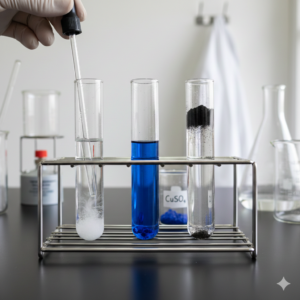
- Glassware’s like volumetric flasks, pipettes and test tubes etc.
-
- Solvents as mentioned in the specification
-
- Magnetic stirrer or sonicator.
-
-
Solubility Test requirement as per USP
-
- Glassware’s like volumetric flasks, pipettes and test tubes etc.
-
- Solvents as mentioned in the specification
-
- Magnetic stirrer or sonicator.
-
-
Solubility Test requirement as per BP
-
- Glassware’s like volumetric flasks, pipettes and test tubes etc.
-
- Solvents as mentioned in the specification
-
- Magnetic stirrer or sonicator.
-
-
Solubility Test requirement as per IH
-
- Glassware’s like volumetric flasks, pipettes and test tubes etc.
-
- Solvents as mentioned in the specification
-
- Magnetic stirrer or sonicator.
4.0 Procedure for Solubility Test:
- Solubility Test as per Indian Pharmacopoeia (IP)
-
- Statement of solubility are indicated by descriptive phrase and are intended to apply at 15º to 30ºC the following solubility table indicates the meaning of the terms used in statement of approximate solubility.
-
- Take required quantity of sample in a suitable dry container, gradually add a small quantity of the solvent given in individual specification into this sample content.
-
- Shake after each addition of solvent.
-
- Add the solvent up to the volume given in the solubility table and observe as per solubility statement, sample complies the solubility statement if it is dissolve completely in a given volume.
Solubility table
| Descriptive term |
Approximate volume of solvent in milliliters per grams of solute |
| Very soluble |
Less than 1 |
| Freely soluble |
From 1 to 10 |
| Soluble |
From 10 to 30 |
| Sparingly soluble |
From 30 to 100 |
| Slightly soluble |
From 100 to 1000 |
| Very slightly soluble |
From 1000 to 10,000 |
| Insoluble or practically insoluble |
More than 10,000 |
-
- The term ‘partly soluble’ is used to describe a mixture where only some of the components dissolve.
-
- The term ‘miscible’ is used to describe a liquid that is miscible in all proportions with the stated solvent.
-
Solubility Test as per United States Pharmacopoeia (USP)
-
- Take required quantity of sample in a suitable dry container.
-
- Gradually add a small quantity of the solvent given in individual specification into this sample content.
-
- Shake after each addition of solvent.
-
- Add the solvent up to the volume given in the solubility table and observe as per solubility statement.
-
- Sample complies the solubility statement if it is dissolve completely in a given volume.
| Descriptive term |
Approximate volume of solvent in milliliters per grams of solute |
| Very soluble |
Less than 1 |
| Freely soluble |
From 1 to 10 |
| Soluble |
From 10 to 30 |
| Sparingly soluble |
From 30 to 100 |
| Slightly soluble |
From 100 to 1000 |
| Very slightly soluble |
From 1000 to 10,000 |
| Insoluble or practically insoluble |
More than 10,000 |
-
- Soluble articles, when brought into solution, may show traces of physical impurities, such as minute fragments of filter paper, fibers, and other particulate matter, unless limited or excluded by definite tests or other specifications in the individual STP.
-
Solubility Test as per British Pharmacopoeia (BP)
-
- Statements on solubility given under the specification and STP are intended as information on the approximate solubility at a temperature between 15º and 25ºC.
-
- Statements given under side-headings such as solubility in ethanol express exact requirements and constitute part of the standards for the substances under which they occur.
-
- The following table indicates the meanings of the terms used in statements of approximate solubility.
| Descriptive term |
Approximate volume of solvent in milliliters per grams of solute |
| Very soluble |
Less than 1 |
| Freely soluble |
From 1 to 10 |
| Soluble |
From 10 to 30 |
| Sparingly soluble |
From 30 to 100 |
| Slightly soluble |
From 100 to 1000 |
| Very slightly soluble |
From 1000 to 10,000 |
| Insoluble or practically insoluble |
More than 10,000 |
-
- The term ‘partly soluble’ is used to describe a mixture where only some of the components dissolve.
-
- Take required quantity of sample in a suitable dry container, gradually add a small quantity of the solvent given in individual specification into this sample content, shake after each addition of solvent, add the solvent up to the volume given in the solubility table and observe as per solubility statement, sample complies the solubility statement if it is dissolve completely in a given volume.

